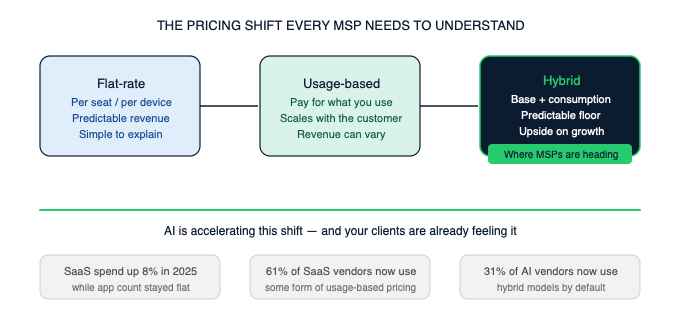
Flat-rate, per-seat pricing was once the backbone of every MSP’s business model. It was simple, predictable, and easy to explain. But the ground is shifting. If you’re not already rethinking your pricing strategy, your clients probably are.
Here’s what’s actually happening right now.
Your vendors have already moved
By 2022, 61% of SaaS companies were using some form of usage-based model (Getmonetizely), and that number has only climbed since. The shift began in cloud infrastructure, with Azure and AWS charging by the resources consumed, rather than the licenses held. Now, it’s spread across the software stack. For example, Microsoft added Copilot to Microsoft 365 and raised subscription prices. In contrast, Google embedded artificial intelligence into Workspace at no added cost (Zylo). These are two very different bets on how AI gets monetized. Neither is a flat rate.
AI is making this more urgent, not less
Annual SaaS spend rose 8% in 2025, while the number of applications remained essentially flat (Zylo). The cost pressure is coming from pricing mechanics, not from adding new tools. Usage-based pricing and AI-driven consumption are quietly rewriting the economics of every contract (BetterCloud). For your clients, this often means unexpected invoice spikes with no obvious cause.
That's your opening.
Three models worth understanding
Usage-based pricing ties cost directly to consumption, such as API calls, data processed, or users active in a given period. The appeal is fairness—customers pay for what they get. The challenge is that revenue becomes harder to forecast, and billing requires more infrastructure to track and reconcile accurately.
Product line pricing takes a different approach. Instead of metering usage, you build tiers: a base offer, a mid-tier, and a premium. Each is priced to reflect the value delivered at that level. This creates natural upsell paths and helps customers choose what’s right for them, without needing a conversation every time.
Hybrid models are where the market is settling. The most common approach combines a fixed subscription base for platform access with variable usage components for overages, AI processing, or premium features (BetterCloud). This creates a predictable revenue floor, with more upside as customers grow.
What this means for you as an MSP
Usage-based and consumption pricing are increasingly common for cloud-centric services. The MSP who masters usage metrics has an edge (DeskDay). But there’s a catch: many MSPs still track third-party licenses, add-ons, and SaaS consumption manually. Mismatches between what customers actually use and what gets billed can cost significant revenue (Syncro).
The MSPs winning in 2026 aren’t just reselling cloud subscriptions. They’re actively managing consumption data, sharing it with clients, and building commercial models that reflect the actual value being delivered. Moving a client from a flat monthly fee to a model that scales with their usage also builds trust. It shows you understand their environment and are aligned with their outcomes.
The practical starting point
Start by checking how you currently bill for cloud services. Are you reconciling actual usage against what you invoice? Are there services where you’re silently absorbing overage costs? Is there a product line structure that would make your offer easier to buy and easier to grow?
Pricing isn’t just a finance question—it’s a positioning question. Partners who get this right will find it much easier to retain customers, expand accounts, and demonstrate ongoing value beyond the help desk ticket.
Simple. Powerful. Beautiful. Pricing starts with understanding what your customers actually use.
Want to see how Cloudmore helps you track, manage, and bill cloud consumption accurately? Reach out to the team.
Share this
How Do I Choose the Best Subscription Pricing Strategy?

Remove Azure Plan Billing Complexities With Cloudmore